

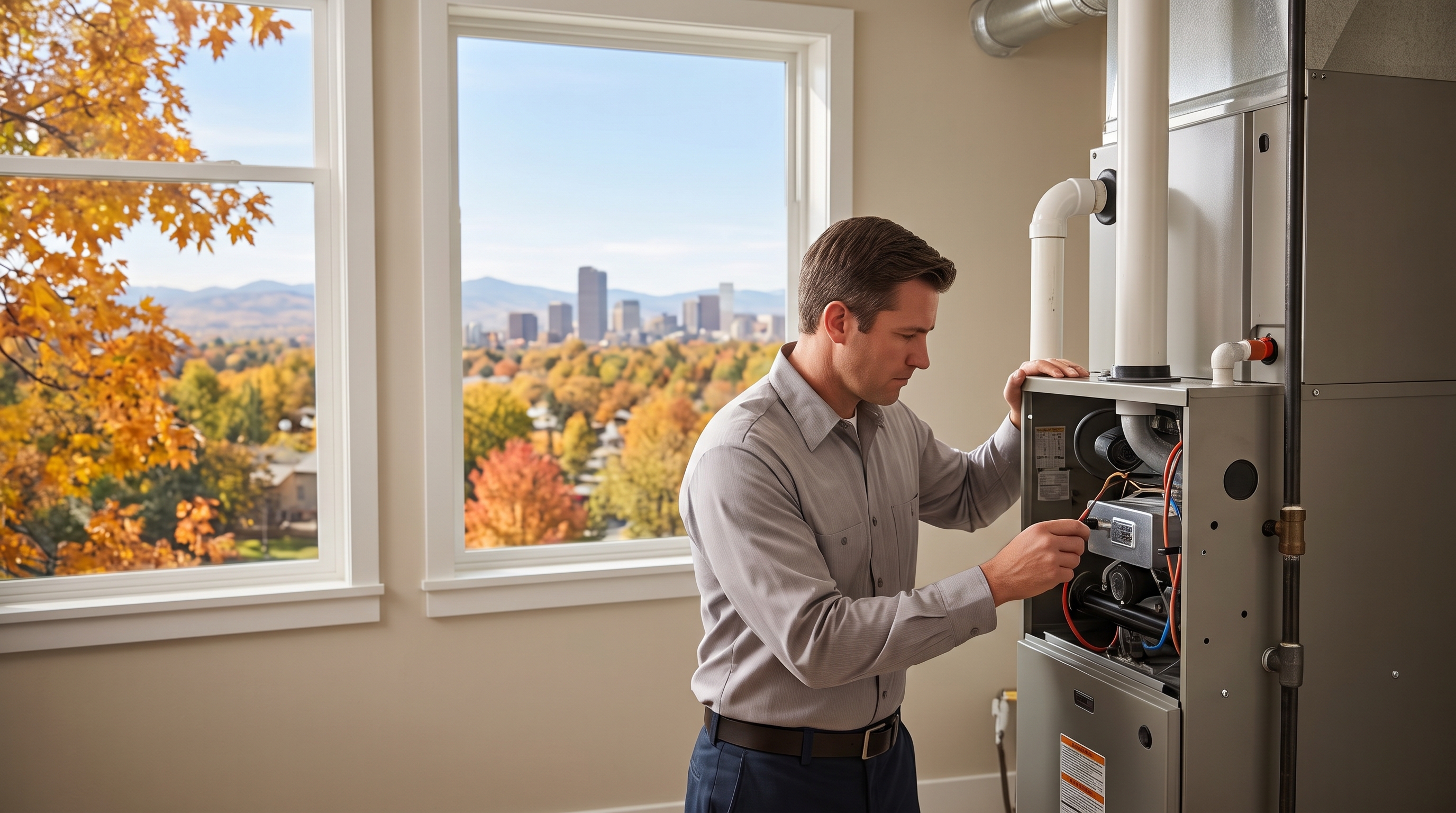
Colorado falls are short and unpredictable. One week you're still running the AC in the afternoon, and the next you're waking up to frost on the windshield. That quick swing from cooling to heating season is exactly why fall is the best time to get your HVAC system ready, before the first cold snap puts it to the test.
Here's a straightforward checklist to help your furnace, thermostat, and home stay efficient and comfortable through the colder months ahead.
1. Schedule a Professional Furnace Tune-Up
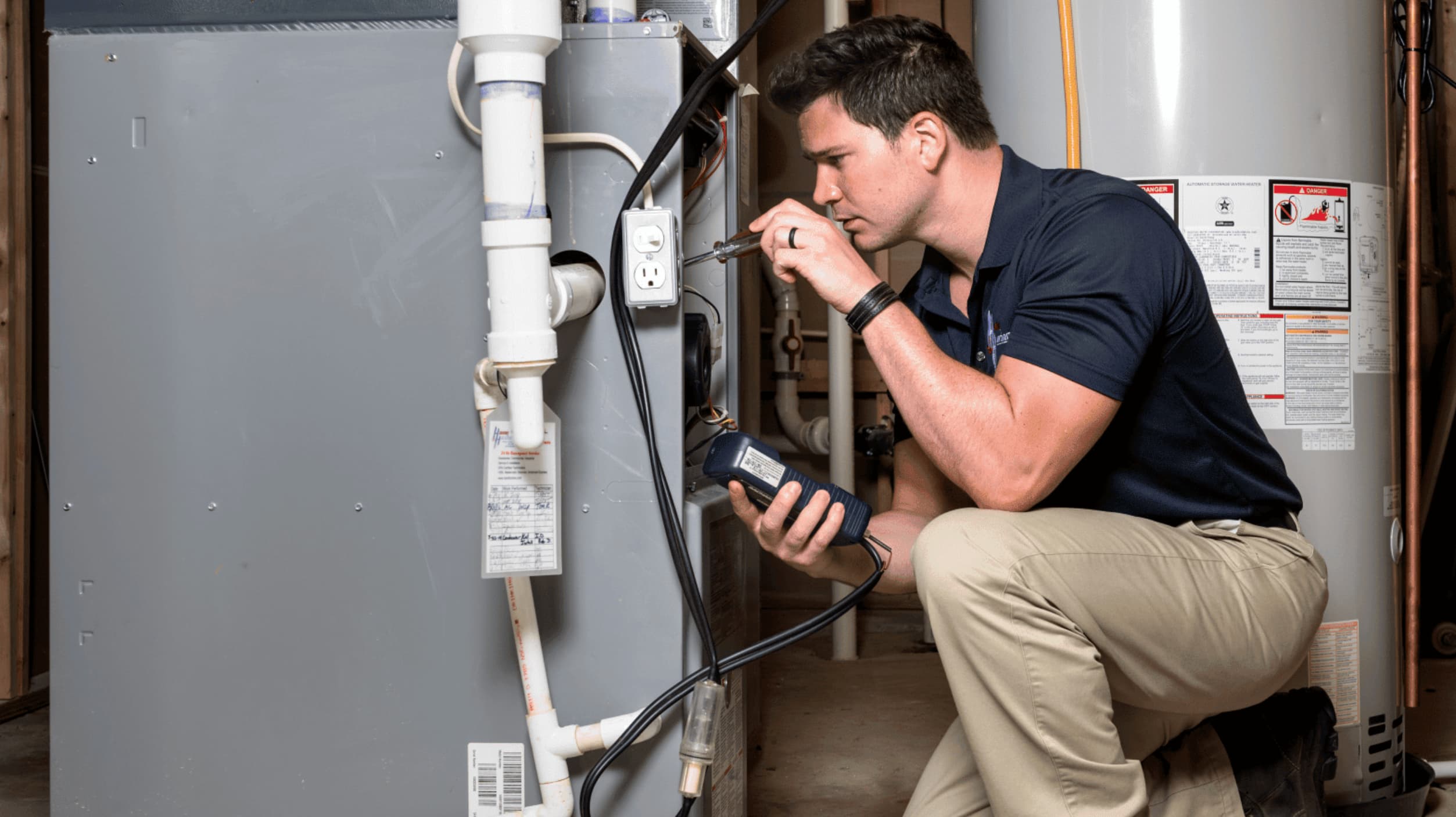
Your furnace has likely sat idle since spring. Dust builds up, pilot lights and igniters can wear down, and small issues that seemed harmless in April can turn into no-heat emergencies in December. A fall tune-up typically includes:
- Inspecting and cleaning the burners and heat exchanger
- Checking the ignition system and flame sensor
- Testing the blower motor
- Verifying proper airflow and ductwork connections
- Checking for carbon monoxide leaks
Why it matters: Denver HVAC companies book up fast once temperatures drop. Scheduling in September or early October means you'll get an appointment on your timeline, not during an emergency call-out in a January cold snap.
2. Replace the Air Filter
If you haven't swapped your filter since summer, now's the time. A fresh filter improves airflow, reduces strain on the blower motor, and helps your furnace run more efficiently from day one of the heating season. Mark your calendar to check it again every one to three months through winter.
3. Test Your Thermostat Before You Need It
Switch your thermostat from cooling to heat mode and let the system run for a few minutes to confirm warm air is coming through the vents. This is also a good time to replace thermostat batteries and, if you're still using an older mechanical model, consider upgrading to a programmable or smart thermostat. Scheduling lower temperatures overnight and while you're away is one of the simplest ways to cut heating costs through winter.
4. Check Your Carbon Monoxide and Smoke Detectors
Furnaces, gas water heaters, and fireplaces all produce carbon monoxide, an odorless gas that becomes far more dangerous once windows and doors stay shut for the season. Test every detector in your home, replace batteries, and confirm you have at least one CO detector near sleeping areas. If any unit is more than seven years old, it's due for full replacement, not just a battery swap.
5. Inspect Weatherstripping and Seal Air Leaks
Heat loss through gaps around windows, doors, and attic access points forces your furnace to work harder to maintain temperature. Walk your home and check for:
- Worn or missing weatherstripping around doors and windows
- Gaps around pipes, vents, or wiring where they pass through exterior walls
- Attic hatches or crawlspace doors without proper seals
Caulk and weatherstripping are inexpensive fixes that pay for themselves quickly in reduced heating bills.
6. Clear Debris From Outdoor Equipment
If you have a heat pump, clear away leaves, grass clippings, and any buildup around the outdoor unit before winter weather arrives. For homes with a chimney or fireplace, fall is also the right time for a chimney inspection or cleaning if you plan to use it during the colder months.
7. Reverse Ceiling Fans
Most ceiling fans have a switch that reverses the blade direction. Running them clockwise on a low setting during winter pushes warm air, which naturally rises, back down into the room. It's a small change that helps rooms feel warmer without raising the thermostat.
8. Check Your Humidifier
Colorado's dry winter air can leave your home feeling colder than the thermostat suggests, along with dry skin, static shock, and irritated sinuses. If your furnace has a whole-home humidifier, fall is a good time to check the water panel or pad and confirm it's ready for the season. If you don't have one, it's worth asking your technician about options during your fall tune-up.
Why Fall Maintenance Matters in Denver
Denver's heating season is long, and a furnace that isn't running efficiently costs you money every single day it's working overtime. Beyond comfort, routine fall maintenance:
- Catches small issues before they become expensive repairs
- Extends the lifespan of your furnace
- Keeps your system running efficiently, lowering energy bills
- Reduces the risk of a no-heat emergency during the coldest stretches of winter
- Helps maintain your manufacturer's warranty, which often requires documented annual service
Get Ahead of Winter With Gale Force
Gale Force Heating & A/C has helped Denver homeowners prepare for winter since 1997. As an A+ BBB-rated, Trane-certified contractor, our technicians know exactly what Colorado furnaces need to perform reliably through the season, and we'd rather catch a problem in October than get a call at midnight in January.
We proudly serve Denver, Aurora, Lakewood, Arvada, Westminster, Thornton, Englewood, Littleton, Parker, Centennial, Highlands Ranch, Castle Rock, Brighton, Commerce City, and the surrounding Front Range communities.
Ready to get your furnace checked before the cold arrives? Call us at (303) 286-1478 to schedule your fall tune-up.