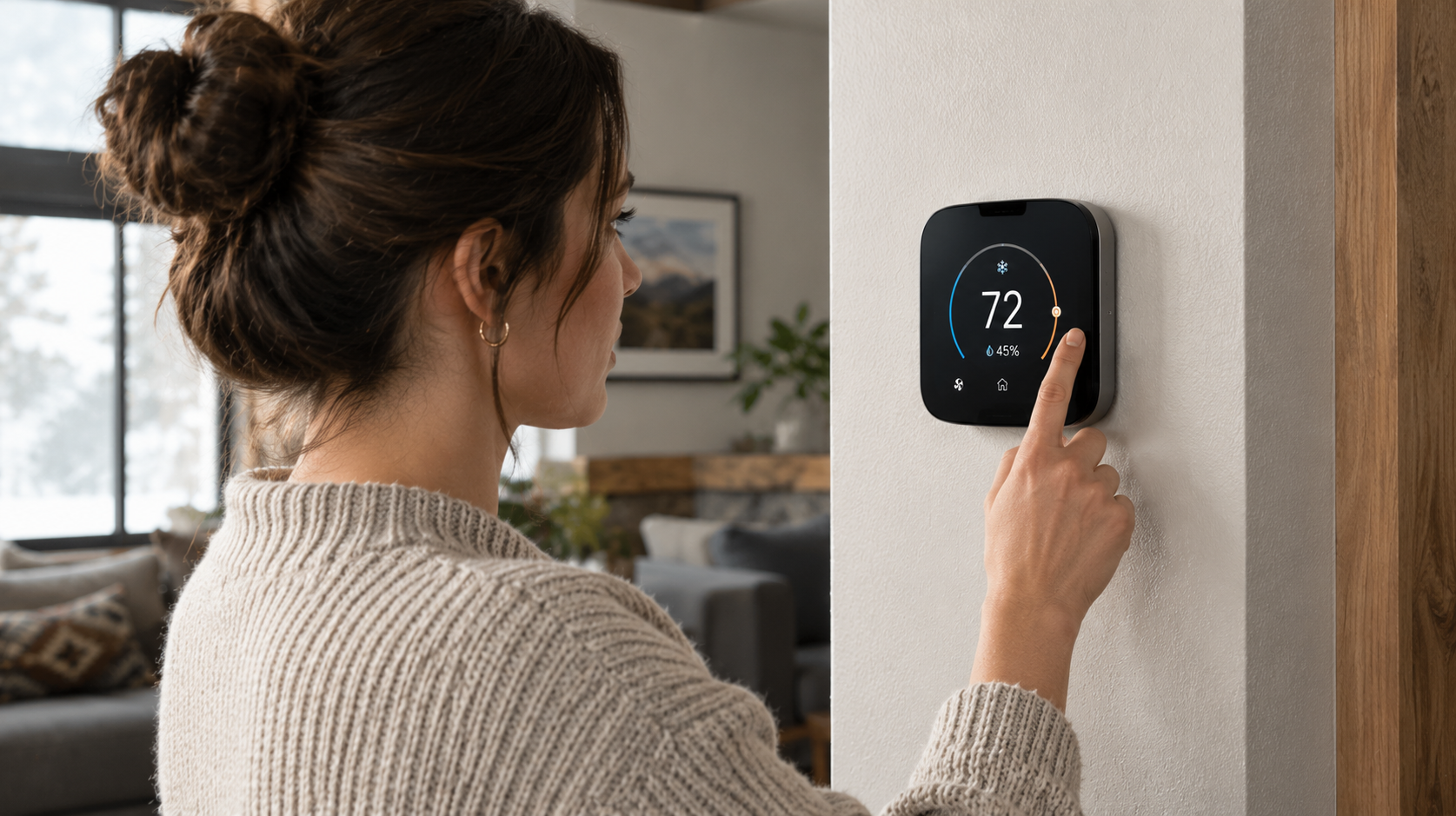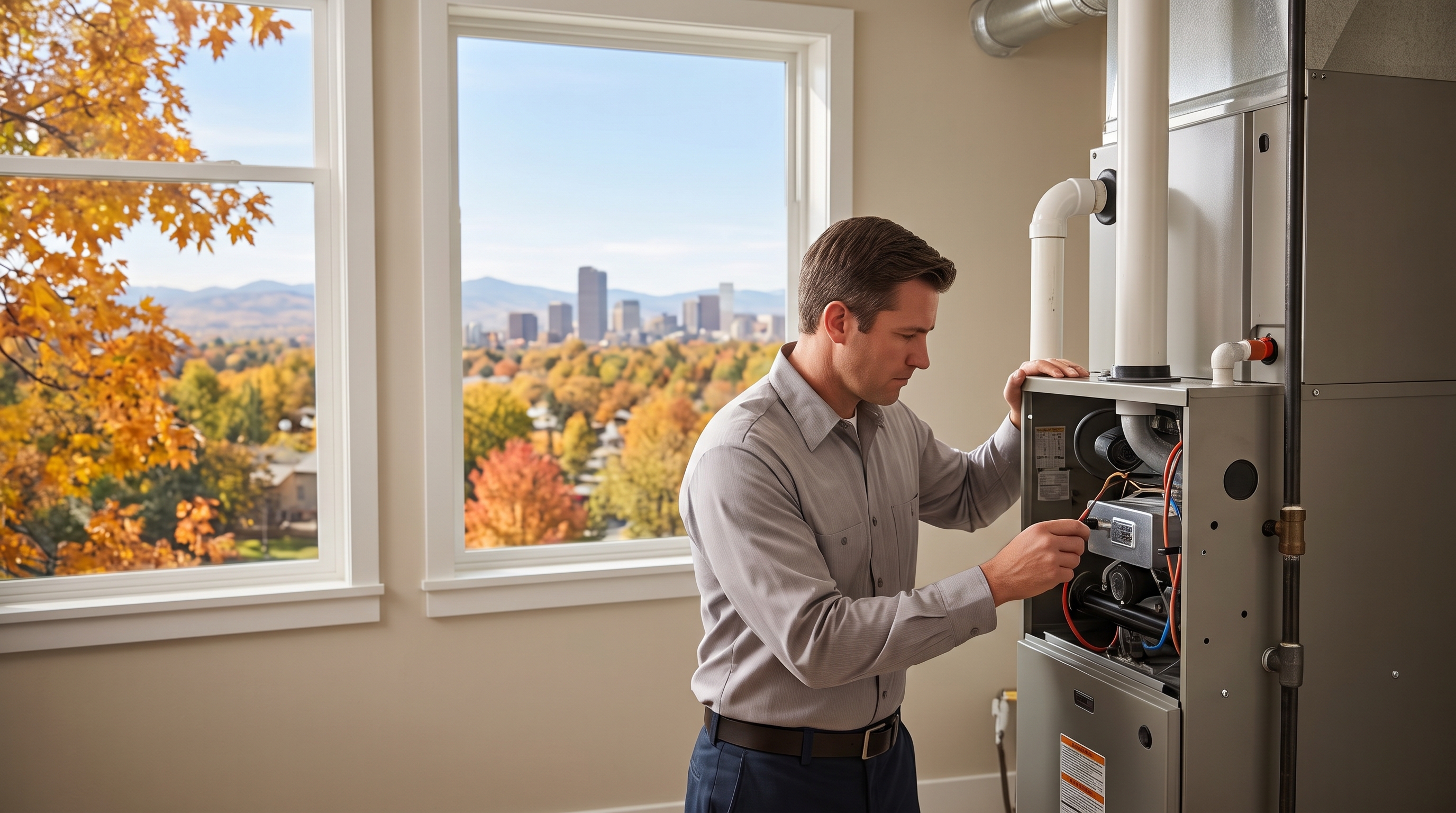


That first cold night of the season always sneaks up on Denver homeowners. One evening it's 65 degrees, and the next you're reaching for the thermostat for the first time since April. Before you do, it's worth taking a few minutes to make sure your furnace is actually ready to go.
Every fall, heating companies across Denver see a spike in service calls in the first week or two after everyone turns their systems back on. Dust that settled over the summer burns off, parts that sat unused reveal problems, and small issues that were fine in spring show up the moment the system has to work again. A little bit of prep now can save you a cold night, or worse, a dangerous situation.
Why the First Startup Is When Problems Show Up
Your furnace hasn't run in months. Dust and debris that built up in the ducts and around the burners can create smoke or odor when the system fires up again, which is normal for the first few minutes but shouldn't linger. More importantly, components like the heat exchanger, ignition system, and gas connections can develop small cracks or wear over the off-season that only become obvious under heat and pressure.
This is also the time of year local fire departments highlight heating safety, since furnace-related carbon monoxide incidents and house fires both increase once everyone starts running their systems again.
Before You Flip the Switch: A Quick Safety Checklist
Run through these steps before you turn your thermostat to heat mode for the first time this season.
- Test your carbon monoxide and smoke detectors. Press the test button on every unit in your home and replace batteries if needed. If you don't have a CO detector near your furnace or bedrooms, this is the week to get one.
- Clear the area around your furnace. Boxes, holiday decorations, and other storage items have a way of migrating next to the furnace over the summer. Keep at least two to three feet of clearance on all sides.
- Check your exhaust vent and intake pipes. Walk outside and make sure nothing, leaves, a bird's nest, a fallen branch, is blocking the vent pipe. A blocked vent is one of the most common causes of carbon monoxide backing up into the home.
- Replace your air filter. A clean filter helps your furnace breathe easier from day one and reduces strain on the blower motor.
- Turn the system on during daylight hours. If something's wrong, you want to notice it and call for help while it's still easy to get a same-day appointment, not at 11 p.m. on the coldest night of the year.
Warning Signs That Mean Stop and Call a Pro
A slight burning smell for the first few minutes is normal as dust burns off the heat exchanger. These signs are not:
- A burning smell that doesn't fade after 15 to 20 minutes
- Any smell of gas or rotten eggs
- Banging, screeching, or grinding noises
- The furnace not igniting at all, or igniting and shutting back off
- Your carbon monoxide detector going off
If you notice any of these, turn the system off, ventilate the home if you smell gas, and call a professional right away. This isn't a situation to wait out.
What a Professional Pre-Season Inspection Catches That You Can't
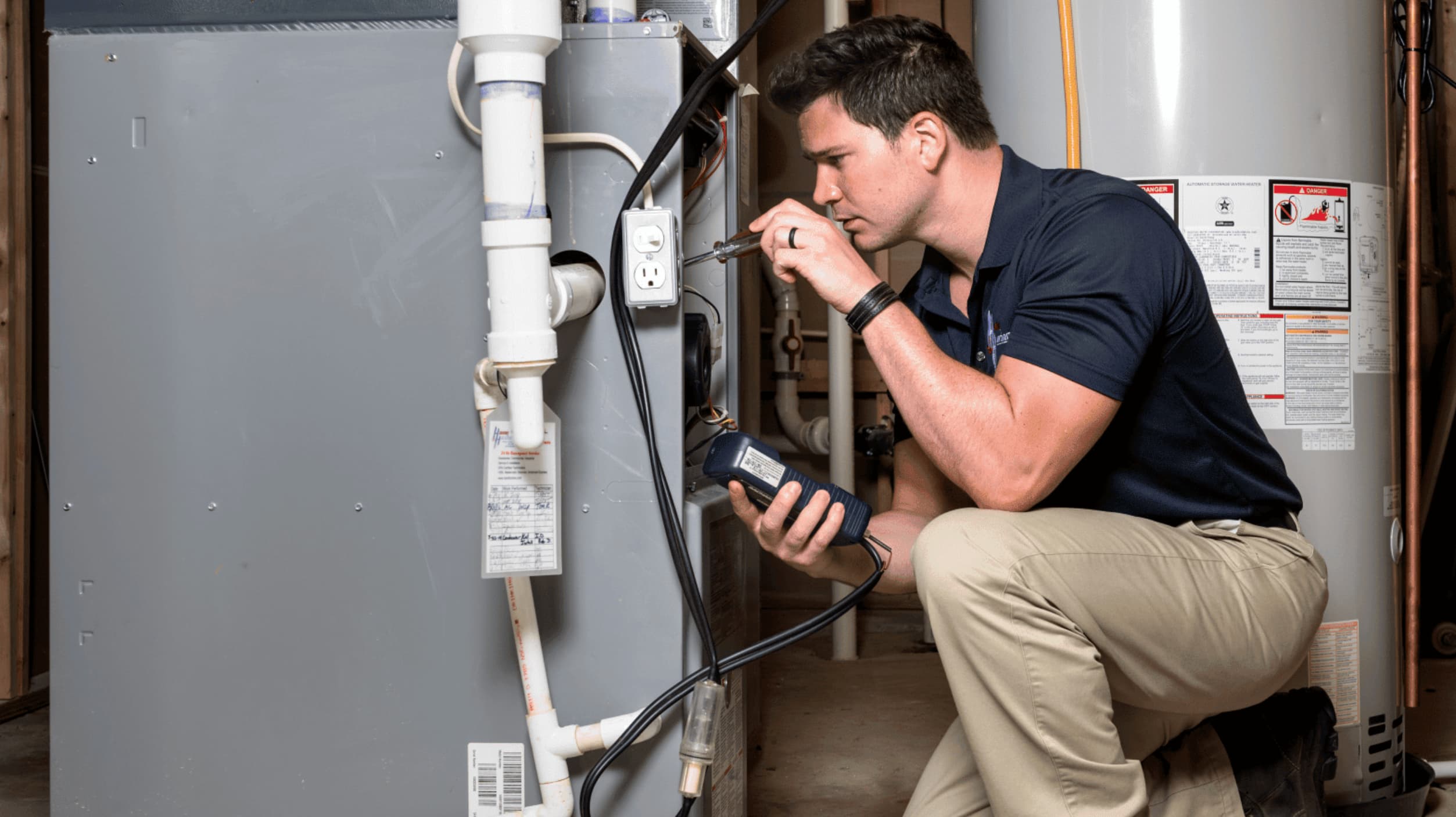
A DIY walkthrough is a good first step, but it won't catch everything. A professional furnace inspection includes things a homeowner can't easily check on their own, like measuring gas pressure, testing the heat exchanger for cracks, checking amp draw on the blower motor, and verifying the flame sensor and ignition system are both working correctly.
Catching a small issue in October is a quick, inexpensive fix. Catching that same issue in January, after it's failed on a night the whole city is calling for emergency heat, is a very different experience.
Don't Wait for the First Cold Snap
If it's been a year or more since your furnace was professionally serviced, now is the time. Appointments are still easy to schedule in October, and having a technician confirm everything is safe and working before you rely on it every day gives real peace of mind heading into a Denver winter.
Gale Force Heating & Air offers furnace inspections and tune-ups across the Denver metro area, along with 24/7 emergency service if something does go wrong. Schedule an appointment or call us at (303) 286-1478.